What Is Technical Operations Administration?
In this 5‑minute module, you’ll learn what Technical Operations is, why it’s essential, and what Technical Operations Administrators actually do.
Why is this important?
Most organisations run on complex systems, processes, data flows, and technical decisions, but very few people know who keeps all of this running smoothly.
The main concept
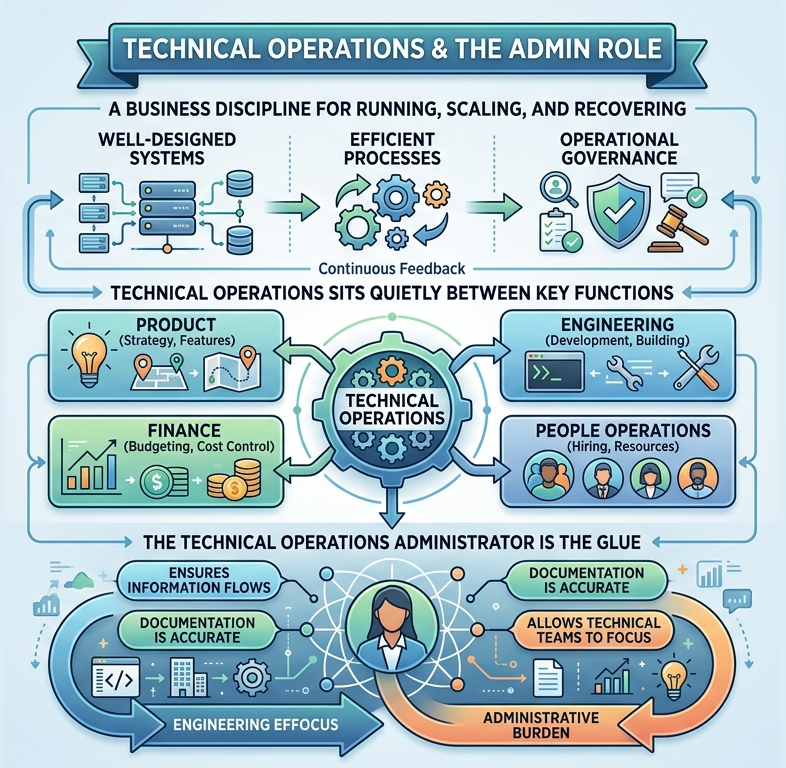
Technical Operations is the discipline that ensures a business can run, scale, and recover through well‑designed systems, processes, and operational governance.
It sits quietly between product, engineering, finance, and people operations, holding everything together.
A Technical Operations Administrator is the glue in this system — the person who ensures information flows, documentation is accurate, and technical teams can focus on engineering rather than admin.
A Real‑World Example: Big Boilers Pty Ltd
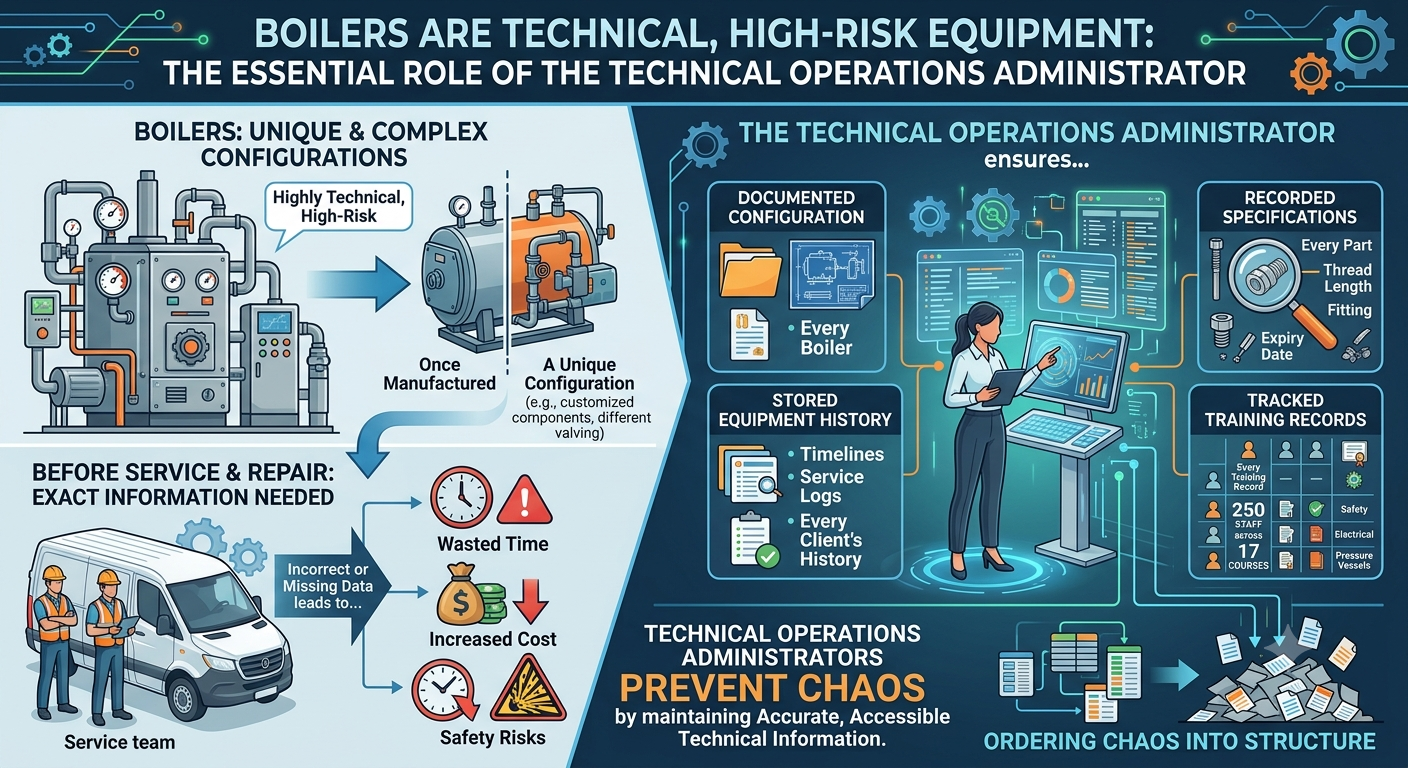
Boilers are highly technical, high‑risk equipment. Each boiler becomes a unique configuration once manufactured.
Service teams need exact information before travelling to repair a unit. Incorrect or missing data leads to wasted time, cost, and safety risks.
The Technical Operations Administrator ensures:
• Every boiler’s configuration is documented
• Every client’s equipment history is stored
• Every part, thread length, expiry date, and fitting is recorded
• Every training record for 250 staff across 17 courses is tracked
Technical Operations Administrators prevent chaos by maintaining accurate, accessible technical information.
Quick check
Which statement best describes the Technical Operations Administrator?
A. Designs new products
B. Manages technical documentation, records, and operational processes
C. Handles only HR and payroll
D. Performs engineering repairs
Correct answer: B
A service team is travelling 600 km to repair a boiler. What information must be available beforehand?
A. The client’s billing address
B. The boiler’s exact configuration and required spare parts
C. The company’s annual budget
D. The CEO’s approval
Correct answer: B